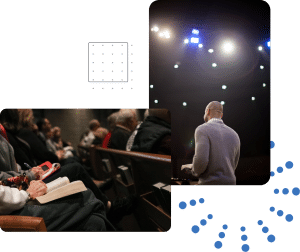
Even if you missed the royal wedding of Prince Harry and Meghan Markle, by now you’ve likely heard that American Bishop Michael Curry brought down the house with his incredible sermon.
It was, by many accounts—including mine—just a fantastic message on the Gospel. It grabbed headlines in England and around the world and the media can’t stop talking about it. (Miss it? Watch it here.)
Question: when was the last time you heard a sermon talked about like that? No…I can’t remember either.
Why did Curry’s sermon connect so well? As Curry and his friend, Archbishop of Canterbury Justin Welby, both mentioned in this fascinating interview, it was “after all, just the Gospel.”
And yet, when something connects so well, it’s a good idea to understand why it connected.
Here are some thoughts. In addition to preaching the Gospel during that message, Curry did at least five things that really connected with people in the room and around the world.
it’s a good idea for preachers to take note. First of all, it’s hard to repeat something that went well if you don’t understand it. Second, everything Curry did is learnable and transferable…there’s no reason you can’t do it too.
So with that in mind, here are 5 things the Bishop did that helped make his message ring out loud and clear.
1. He didn’t use notes
It appears that Curry had notes (or at least YouVersion on his iPad), but he rarely even looked at them.
And that made him seem deeply believable and sincere.
This isn’t a good thing. It’s just a true thing.
Having notes and using notes are two different things as a preacher. Curry didn’t use them.
You might be 100% sincere and authentic when reading from your notes. But you don’t come across that way.
When you read a talk, or rely heavily on your notes, people think it’s coming from your head, not your heart.
When you read a talk, or read your notes, people think it’s coming from your head, not your heart. Share on XOr worse, they think it’s a series of points you’re supposed to believe but don’t. Freeing yourself up from your notes creates a much more believable message.
When you read a speech, people think you’re insincere and inauthentic, even when you’re not.
When you read a speech, people think you’re insincere and inauthentic, even when you’re not. Share on X2. He made eye contact with everyone
That’s the power of going notes free. He said in an interview later that he spent a lot of his message making eye contact with Prince Harry and Meghan Markle.
That’s just huge. It’s annoying when people don’t look you in the eye when they talk to you in person.
It’s very disengaging when a public speaker doesn’t.
Looking people in the eye is one of the best ways to let them know you believe what you say.
Looking people in the eye is one of the best ways to let them know you believe what you say. Share on X3. He was passionate
Passion makes you seem like you believe it…and I think that astonished the media and guests. (As in: This guy seems like he actually believes this stuff!!!!)
Remember this preachers: your congregation’s passion level will rarely exceed yours. So be passionate.
If anything deserves passion, the Gospel does.
Preachers, your congregation's passion level will rarely exceed yours. So be passionate. Share on X4. He knew his talk inside out
There’s speculation that Curry may have gone off script, and he may have.
But it was clear he knew where he was headed, and that allowed him to connect with the crowd even more.
The key to speaking without using notes is not to memorize your talk, but to understand it.
My guess is that’s exactly what the Bishop did—he knew what he wanted to accomplish, which gave him a lot of freedom.
The key to speaking without using notes is not to memorize your talk, but to understand it. Share on X5. He brought fresh language to a timeless subject
Curry’s talk seemed very fresh and spontaneous, but underneath is were some carefully crafted phrases. His carefully crafted phrases rang true at a deep level.
One of his lines even became the headline for The Times of London. That’s the power of intentional language.
The differences between a carefully crafted phrase and a poorly crafted phrase are simple: one is memorable, the other isn’t. One connects, the other doesn’t.
If you want to know how to write memorable phrases, here’s my methodology.
The difference between a carefully and poorly crafted phrase: one is memorable. The other isn't. Share on X