


This post is in partnership with VisitorReach, written by Poncho Lowder, Founder and CTO, and Kalye Antonyuk, Content Marketing.
A practical approach to using AI and digital tools with curiosity, wisdom, and purpose
Digital tools for churches are changing quickly, but becoming more tech-savvy is not about chasing every trend. It is about learning to use technology wisely so your church can communicate clearly, reduce unnecessary work, and serve people more intentionally.
Artificial intelligence is no longer sitting on the edge of everyday work. It is shaping how teams write, analyze information, plan, automate tasks, and solve problems. For church leaders, that can feel exciting, overwhelming, or both.
AI is already becoming part of everyday ministry work. Barna found that 87% of U.S. pastors say they use AI. Half use it for brainstorming and idea generation, while 34% use it for administrative tasks like scheduling and emails.1
But the goal is not to turn every pastor or ministry leader into a technology expert. It is to develop a posture that is curious, adaptable, and willing to keep learning.
As Carey Nieuwhof puts it, “The question for church leaders becomes not whether the church will embrace A.I., but how the church will embrace A.I.”²2
Using Technology Wisely Starts With the Mission
Churches do not need to know everything about every new platform. What matters is a willingness to keep learning, adapting, and evaluating technology through the lens of the mission by asking: Will this help us serve people better?
That mindset matters as communication habits and expectations continue to change. A learning posture helps your church stay responsive without chasing every new tool or holding onto outdated processes simply because they are familiar.
So what does that look like in practice?
Here are five practical ways to start:
1. Choose Tools That Serve the Mission
Using technology well is not about collecting apps or chasing every new feature. It is about choosing technology that helps your team serve your mission.
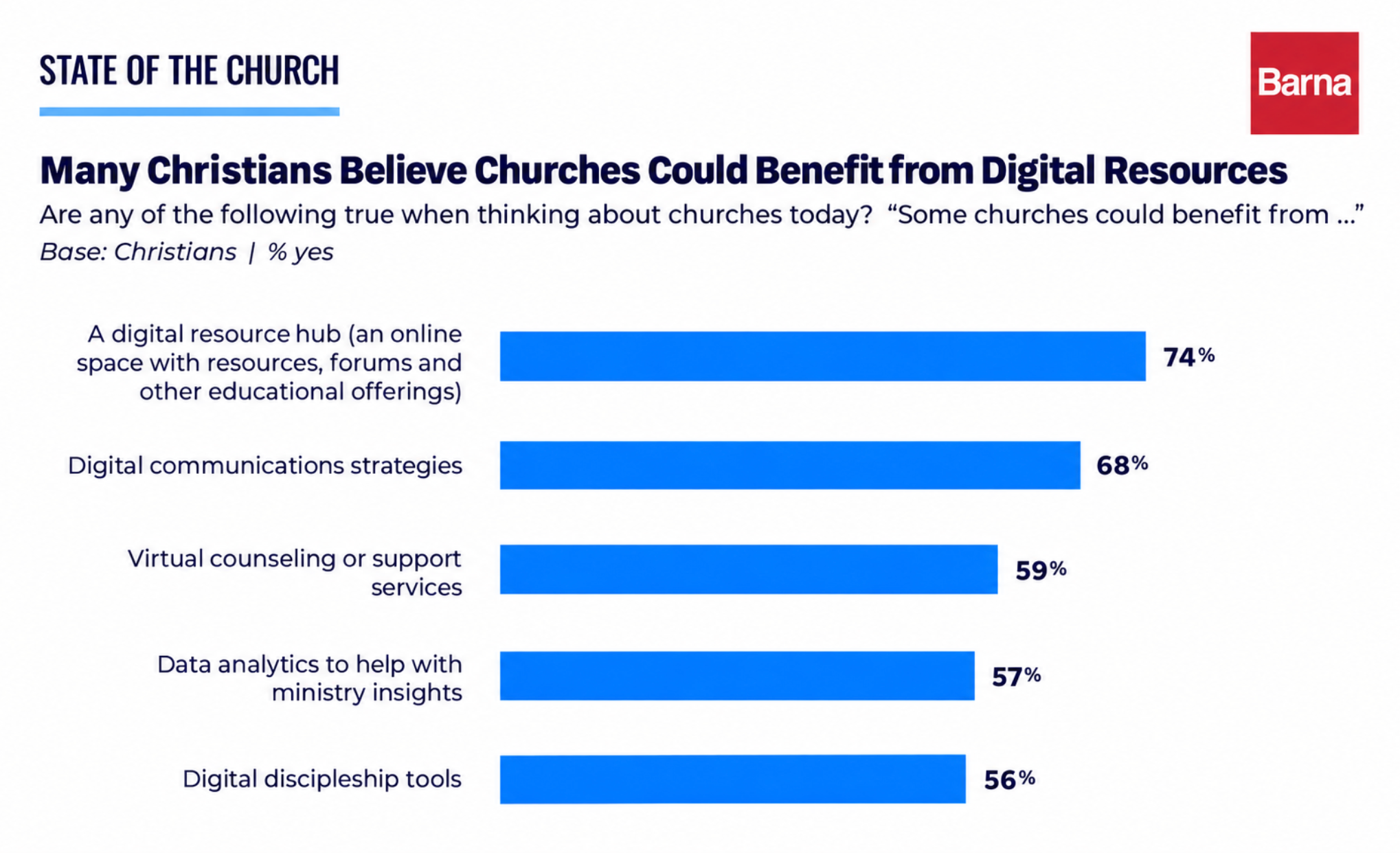
Many Christians see that potential. Barna found that a strong majority believe churches could benefit from digital tools, including a digital resource hub (74%), better social media outreach (70%), and digital communication strategies (68%).³
The right tool should reduce friction, save time, improve clarity, or make a process stronger. So before adopting something new, ask:
- What tool best supports our mission?
- What system gives us better visibility?
- What automation protects time and energy for higher-value work?
Is your church also interested in digital communication strategies? Explore 7 church strategies that use digital tools to support your mission and fuel evangelism.
2. Use AI to Experiment
Pastors are already experimenting with AI in practical ways. Barna found that 50% use AI for brainstorming and idea generation, while 34% use it for administrative work like emails, scheduling, and document preparation.
One of the best ways to discover what AI can do is to experiment with it—take work you’re already doing and see what new ideas, formats, or approaches it can help you uncover.
Experiment with things like:
- Ask AI to challenge your thinking. Give it a plan, idea, or process and ask, “What am I overlooking?” or “What would you improve?”
- See how far one piece of content can go. Give AI a sermon recap or announcement and experiment with turning it into different formats.
- Explore what AI can do with a routine task. Pick something you do regularly and experiment with which parts AI can simplify, speed up, or automate.
- Create modern-day visualizations of biblical ideas. One example is generating photorealistic imagery of a parable placed in a contemporary setting, which could be interesting for teaching or sermon visuals.
AI can also help with one of the most personal parts of ministry: responding to people. Try using AI to draft a response, explore a different tone, or find a clearer way to say what you want to communicate.
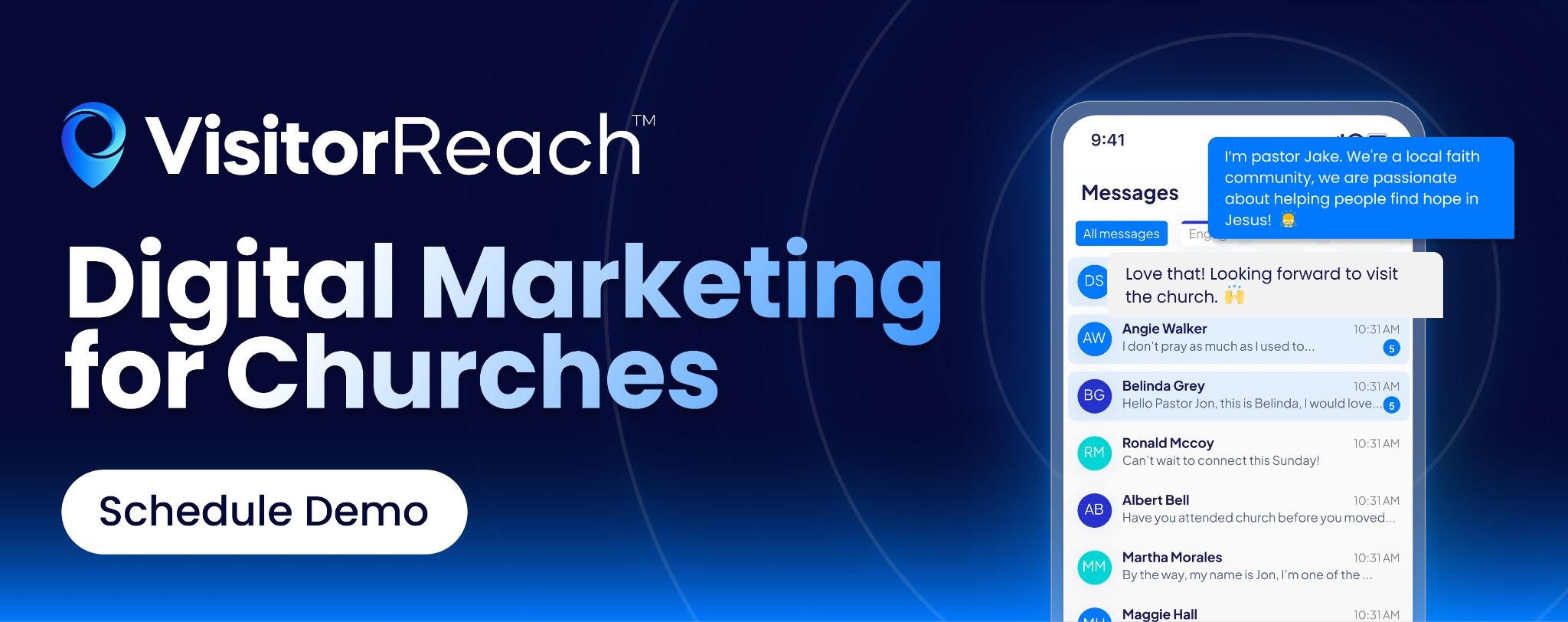
VisitorReach’s AI Conversational Assistant helps church teams do just that. From the dashboard or mobile app, your team can use AI-assisted responses tailored to your church’s voice and choose from four response styles: Our Voice, Empathetic, Informative, or Scriptural. Giving you a powerful tool to craft meaningful responses, efficiently.
As you experiment, treat AI-generated drafts as a starting point. Personalize and refine each response so it reflects your voice and the person you’re talking to.

3. Technology Is Not Just About Productivity; It’s About Service
Every gain in speed, insight, and automation can become a gain in ministry impact when it is directed toward what matters most.
- When we analyze patterns faster, leaders can make better-informed decisions.
- When we automate repetitive work, our teams gain more time for meaningful work and deeper care.
- When our systems work well, we can serve people more consistently.
That’s why using technology isn’t separate from our ministry values. It can be an expression of stewardship.
That’s the thinking behind VisitorTap. When someone is ready to connect with your church, technology shouldn’t put more steps in their way. It should make that next step simple.
Because ultimately, stewarding technology well is about helping people take the next step more easily and helping ministry teams serve them more effectively.
As Pastor Carey Nieuwhof puts it, “People are looking for a reason to leave or a reason to stay. The hospitality of your church often tips the scale.”
Colossians 3:23 reminds us, “Whatever you do, work heartily, as for the Lord and not for men.”
That includes how we serve, how we improve, and how we steward the tools in our hands.

4. Start Small and Build From There
Technology can feel overwhelming when learning is treated like a major project. In practice, fluency often grows through small repetitions: one tutorial, one shortcut, one AI prompt pattern, or one feature explored at a time.
Instead of telling your team, “We need to learn AI,” start with one real task.
For example, AI can take repetitive ministry tasks like volunteer scheduling off your plate. Instead of manually finding a replacement every time someone declines, AI can help manage your Planning Center schedule based on factors like who has served recently. That means less time coordinating schedules and more time focused on ministry.
Zechariah reminds us to “not despise these small beginnings” (Zechariah 4:10) and Proverbs 1:5 says,“Let the wise listen and add to their learning…”
Both remind us that growth often begins with a willingness to learn and take the next small step.
We don’t have to know everything before we begin. We can stay teachable, start small, and grow from there. The goal is not to master every new technology. Learn one useful thing, apply it to real ministry work, and build from there.
Carey Nieuwhof puts it this way: “Embracing new methods always keeps the mission alive in ways that resisting them never will.”²
Leaders set the tone for that kind of learning. When your team sees you asking questions, trying new things, and being willing to learn, you show them that growth is part of healthy leadership—not something to be intimidated by.
5. Curiosity is One of the Clearest Signs of a Healthy Technology Culture
“An intelligent heart acquires knowledge, and the ear of the wise seeks knowledge.” — Proverbs 18:15
Curiosity Turns Assumptions Into Questions. Curious leaders ask:
- What are we doing manually that could be simplified or automated?
- Where could technology help us respond faster or serve people more personally?
- Where are people getting stuck when trying to connect with our church?
- Are we making it easy for someone outside our church to find us and take a next step?
These questions become especially valuable when you apply them to the experience of someone outside your church.
One way to get curious is – Try searching for your own church the way a visitor would.
Open Google Maps and search “church near me.” Ask Siri or Alexa to find a church nearby. Search for your denomination in your city. Then look at what someone sees.
Does your church show up in the top 5 results? Is your address consistent? Is it obvious where someone should go to learn more?
VisitorReach helps churches evaluate this kind of digital visibility and helps remove any barriers between someone searching and your church being found.
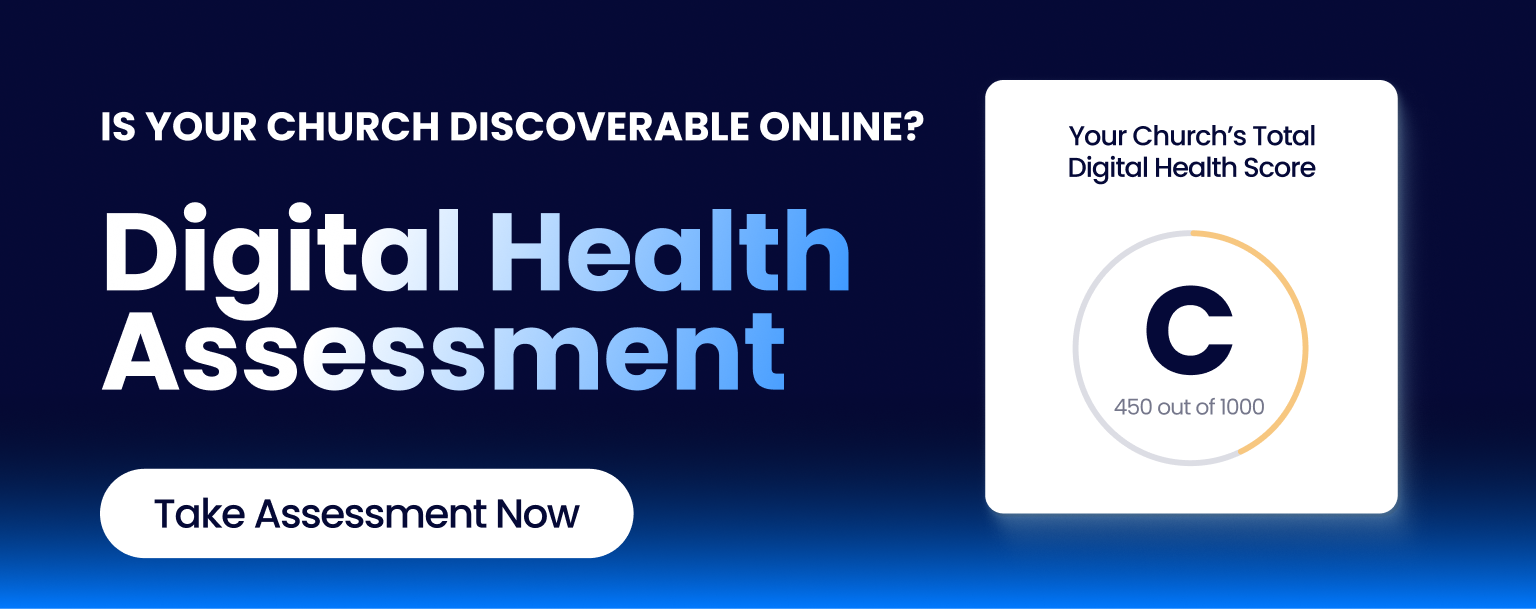
Want to quickly see how easy your church is to find online? Take the free Digital Health Assessment by VisitorReach to find out.
Other Steps to Help Build Your Tech Skills
- Pick one tool you already use. Learn your everyday tools better before adding new ones.
- Follow one trusted source. Choose one product blog, channel, or newsletter so your learning stays focused and manageable. The Carey Nieuwhof Leadership Podcast is a great place to start.
- Look at your every day tasks. The best time-savers often come from the tasks that feel repetitive or cumbersome.
- Share with the team. Don’t keep your learning to yourself, but make it a shared team advantage.
- Choose tools backed up with ongoing support. Technology is more useful when you have knowledgeable people to turn to for questions, and ongoing support.
You don’t have to figure out new technology on your own. VisitorReach provides churches with technology to make marketing and outreach simpler and more effective. More than just providing tools, the VisitorReach team continually improves its solutions and provides ongoing support from people who understand the unique needs of the Church.
Using new technology isn’t about looking impressive. It’s about putting the right tools to work for your church’s mission.
Technology isn’t replacing ministry. Using new technology means choosing to stay useful, thoughtful, and ready in a world that keeps changing.
Churches need leaders who can combine wisdom with adaptability, conviction with curiosity, and mission with thoughtful execution.
So stay curious. Experiment. Start with one problem worth solving and learn one useful thing at a time. And as new technology emerges, keep bringing it back to the question that matters most
Will this help us serve people and advance our church mission more effectively?
Put Technology to Work for Your Church’s Mission
VisitorReach helps your church get found online, reach spiritually curious people, start conversations, and stay connected over time.
With the VisitorReach system, you get:
- Search Listing Management to help people find your church online
- Meta & Google Ads to reach people in your community
- Text & Email Workflows to follow up with ad responders
- Conversation App to manage communication
- Support from a team of marketing experts who understand the local church
- VisitorTap tags to improve in-person engagement
Built by pastors, for pastors, VisitorReach is more than technology. Our team of experts meets with you each month to provide practical guidance, answer questions, and help you put these tools to work for your mission.
Technology cannot replace personal ministry, but it can help churches reach people searching for hope, connection, or a place to belong.
Ready to see what that could look like for your church? Book a 15-minute call today.
Footnotes:
- Barna Group, “Pastors Using AI in Ministry,” Barna Access, https://access.barna.com/articles/pastors-using-ai-ministry.
- Carey Nieuwhof, “The Ultimate Guide to A.I., Pastors and the Church,” Carey Nieuwhof, https://careynieuwhof.com/the-ultimate-guide-to-a-i-pastors-and-the-church.
- Barna Group, “Churches and Digital Tools,” Barna, https://www.barna.com/trends/churches-digital-tools.