Unlock your potential as a church and as a leader.
Your growth starts here.
Don’t settle for an impact smaller than you’re called to make. Lead confidently into a future filled with growth—for yourself, your church, and your mission.
START TODAYTHRIVE IN LIFE AND LEADERSHIP
Hi, I’m Carey Nieuwhof…

I want you to take a look at your life and leadership. Are you where you want to be? Are you and the people you lead truly thriving?
For most of us, the answer is, “Not yet.” But I’d love to see you succeed in getting there.
It’s time to say YES to leading and growing in a sustainable, impactful, and healthy way. What you’ll find here — whether it’s insights from world-class leaders or practical resources you can use day in and day out — will help you build confidence and find clarity so you can grow your church and your leadership… without years of trail-and-failure.
Your growth starts here.
Hi, I’m Carey Nieuwhof…
I want you to take a look at your life and leadership. Are you where you want to be? Are you and the people you lead truly thriving?
For most of us, the answer is, “Not yet.” But I’d love to see you succeed in getting there.
It’s time to say YES to leading and growing in a sustainable, impactful, and healthy way. What you’ll find here — whether it’s insights from world-class leaders or practical resources you can use day in and day out — will help you build confidence and find clarity so you can grow your leadership and your church… without years of trail-and-failure.
Your growth starts here.

Out with feeling stuck. In with real results.
Get started today by listening to my podcast, reading one of my articles, joining my newsletter, or choosing a resource below.
Preach More Effectively
Start preaching clear, engaging, and memorable sermons that connect with your audience — every single week.
Boost Your Productivity
Feeling overworked and overcommitted? Start living and leading in a way that won’t burn you out… without losing impact.
Fund Your Mission
Need to fund your mission? Learn how to overcome the 4 hurdles that stand in the way of increased giving and generosity.
MY COMPREHENSIVE TRAINING IS INSIDE…
Leadership doesn’t have to be lonely and overwhelming.
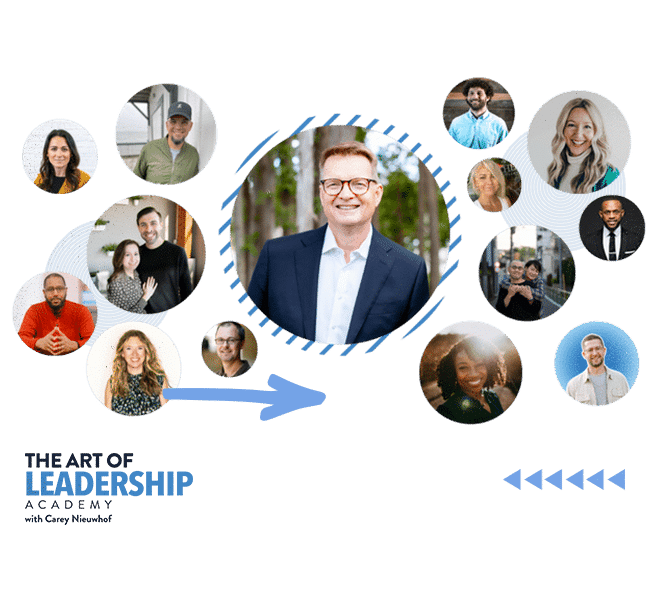
In the Art of Leadership Academy, you’ll engage a private online community of leaders committed to leading healthy, growing churches.
Through ongoing guided discussions, live coaching calls, and a forum to ask any leadership question you have, you’ll discover new strategies, build practical day-to-day skills, and get immediate feedback from people who have led through the exact same challenges and opportunities you’re facing.
You can keep learning from your own mistakes, or you can fast-track your growth and learn directly from people who have been in your shoes before—including me. When I show up in the community (most days each week), it isn’t a team member or a bot… it’s really me.
Life-Giving Community
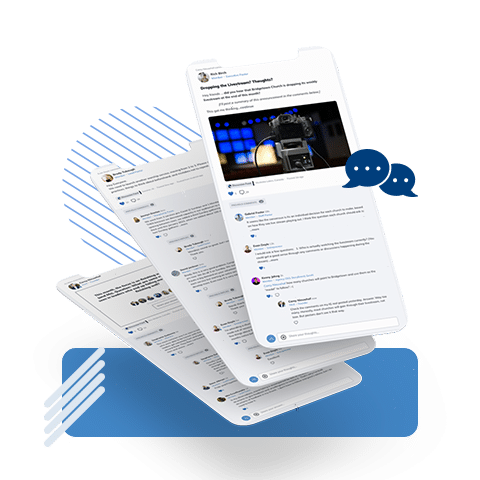
Through guided discussions and a forum to start your own, you’ll go from “nobody knows I’m here” to frequent engagement with leaders just like you.
Live Coaching Calls

Connect with me, my team, and top leaders on Live Coaching Calls, held monthly, where we discuss today’s most pressing leadership topics.
Invested in Your Success

Start with a warm welcome and onboarding call invested in your success. Plus, tap into our support team whenever you need it — no extra cost.

Get equipped with practical leadership strategies, tools, and skills that fast-track your church’s growth.
When you join, you also get unlimited access to my best material that you won’t find anywhere else.
A Growing Library of Comprehensive Courses (with Bite-Sized Modules)
My courses cover anything (and everything) from becoming a more effective preacher and communicator, to freeing up time and energy to focus on what matters most to you. And from creating a culture of generosity at your church, to developing leaders that can grow areas of your ministry.
It’s all broken down into bite-sized modules that have…
Workbooks, Templates, Cheatsheets, Checklists, Scripts and More
These day-to-day resources take you from concept to execution immediately — and they’re included in each course and training. You’ll get access to hundreds of workbooks, templates, cheat sheets, checklists, scripts, and assessments to turn the concepts and insights into immediate action.
And to top it all off…
Done-For-You Leadership Development (for Staff Meetings)
With new leadership development material every month, you can prepare your staff and volunteers to make better decisions — stress free. Each month, you’ll receive a plug-and-play video training, meeting agenda, and application guide so you can cross staff meeting prep off your to-do list for good.
14,000+ leaders have used these courses to get real results.
You can too.
Get unlimited access to all of the courses below. Every course is available on-demand and includes additional resources to help you turn the concepts and insights into immediate action—workbooks, templates, cheat sheets, checklists, scripts, assessments, and more.

What would it feel like to know that you’d deliver each and every sermon clearly and truthfully? It’s time to ditch the random, stressful, and last-minute approach to becoming a better preacher and communicator.
This training leads you through EVERY aspect of writing, preparing, and delivering sermons that connect—from preparation right through to feedback.
You’ll save hours each week with a better sermon prep process, write messages people remember for months (or even years), deepen your own connection with the text by seeing things you’ve never noticed before, and more.

Too many pastors burn out by bearing the weight of leadership all by themselves.
If you have the passion, the mission, and the strategy… but your team just can’t seem to execute like you need, then it’s time to try something new.
You deserve to lead a team of the best leaders you can find. And that’s exactly what you’ll find in this course. You’ll get step-by-step insights and strategies for ending toxicity and drama, eliminating time-wasters, creating a culture that thrives, and, most importantly, finding and developing leaders who will GROW your ministry.
Don’t let underperforming staff and volunteers hold back your mission. Start leading a more effective team today.

Why are conversations around giving and money always uncomfortable, awkward, or even flat-out ignored at church?
In the Art of Building a Generous Congregation you’ll get a proven method to increase giving, create a culture of generosity at your church, and grow the impact of your mission.
Even if you don’t feel comfortable talking about it now. Even if you’ve never seen your congregation fully engage that kind of conversation. And ESPECIALLY if you’ve tried other methods without success.
Don’t let the past stand in the way of your future. Starting today, you can lead your members and your church into a financially flourishing future.

If your church is continually pushing to break past the 200, 400, or 600 attendance level… only to be stuck again a few months later… then it’s time to break the cycle.
Through a series of transformative conversations and assessments, you, your board, staff, and key leaders will gain clarity into what’s holding your church back. From there, you’ll get actionable strategies and tools to knock down the barriers that stand between you and reaching more people.
Is your church too insider focused? Do leaders feel empowered? Is your Elder Board working effectively? Do guests feel welcome? Uncover all of that, and more, in the Art of Church Growth.
The #1 barrier to church growth isn’t spiritual or culture: it’s us. Leave a lasting impact on your community, starting today.

Do you know what it feels like to spend hours creating a piece of content and hit publish… only for it to fall flat? For it to miss the very people you’re trying to reach?
What if you could get an online growth formula that just simply works? Get the exact habits, strategies, and top insights I’ve used to go from 0 to…
30+ Million Podcast Downloads
100,000+ Email Subscribers
180,000+ Social Followers
The best part? You can find growth without a big budget, without sounding spammy, without selling your soul, and without making the mistakes that 99% of people make.

As a leader, you have a vision of what could and should be. But what stands in the way? Is it the status quo? Culture? People?
When leaders fail to implement change successfully entire organizations are derailed, leadership teams burn out, and relationships get torn apart. But that doesn’t have to be the case for you.
In the Art of Leading Change, you get my entire playbook for leading change — from start to finish. You’ll know how to approach change with confidence and wisdom, when to make the changes you need to make, who to include in the process, how to communicate it, and how to handle conflict along the way.
It’s the complete package of frameworks, mindsets, strategies, and skills that will equip you to lead change without losing everything along the way.

Research from Barna Group reveals that 77% of Americans believe in God or a higher power and 74% would like to grow spiritually.
The good news? People are spiritually open. The bad news? They aren’t visiting or attending.
In the Art of Reaching, you’ll learn actionable strategies to expand the number of people your church reaches and engage visitors and members alike to become passionate about the mission.
From mastering your first-time guest experience (ensuring people feel welcome) right through to empowering your congregation to live out their faith, your church will have a toolkit to effectively reach and impact more lives.

So much rides on a healthy leadership transition. A bad one can ruin a great legacy, hurt a church, and make the new lead pastor a sacrificial lamb… or it can go exceedingly well.
If you’re the Pastor stepping into leadership, this is your lifeline to navigate succession with wisdom and clarity. You’ll get proven strategies, insights, and skills that walk you through each step of the process — from discerning your calling right through to finding success as a successor.
Hundreds of churches have used this exact plan to navigate the critical 7-year transition window, from 2 years pre-transition to 5 years post-transition.
Don’t try navigating this alone. Skip years of trial-and-error (and failure) by getting a succession roadmap that guides you each step of the way.
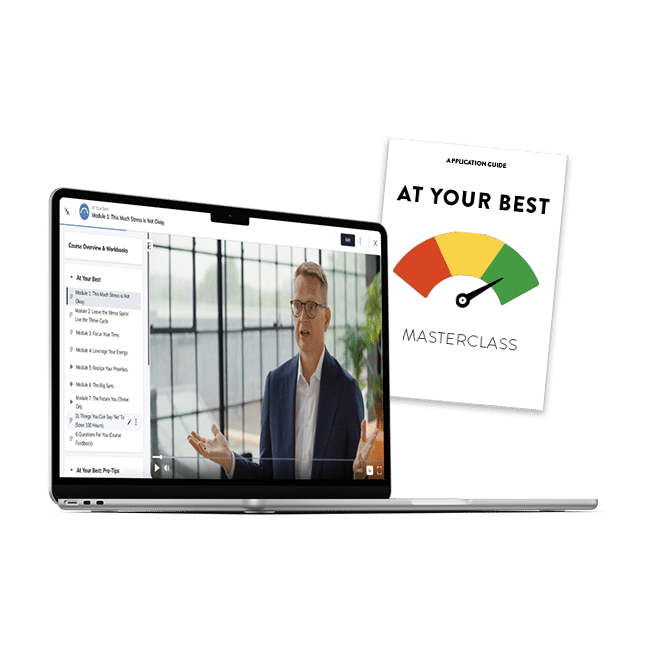
Take an honest look at the pace that you’re currently living at. Could you do this forever? Would you even want to? For most people, the answer is no.
Well, if your busy season has no ending, it isn’t a busy season at all — it’s your life.
50,000+ leaders have used my At Your Best strategy to leave stress and overwhelm in the past and finally do what they want to do—grow their organizations, advance their leadership, spend less time at work, be far more present with family and friends, and take restful time off.
You can too. Start leading and living At Your Best.
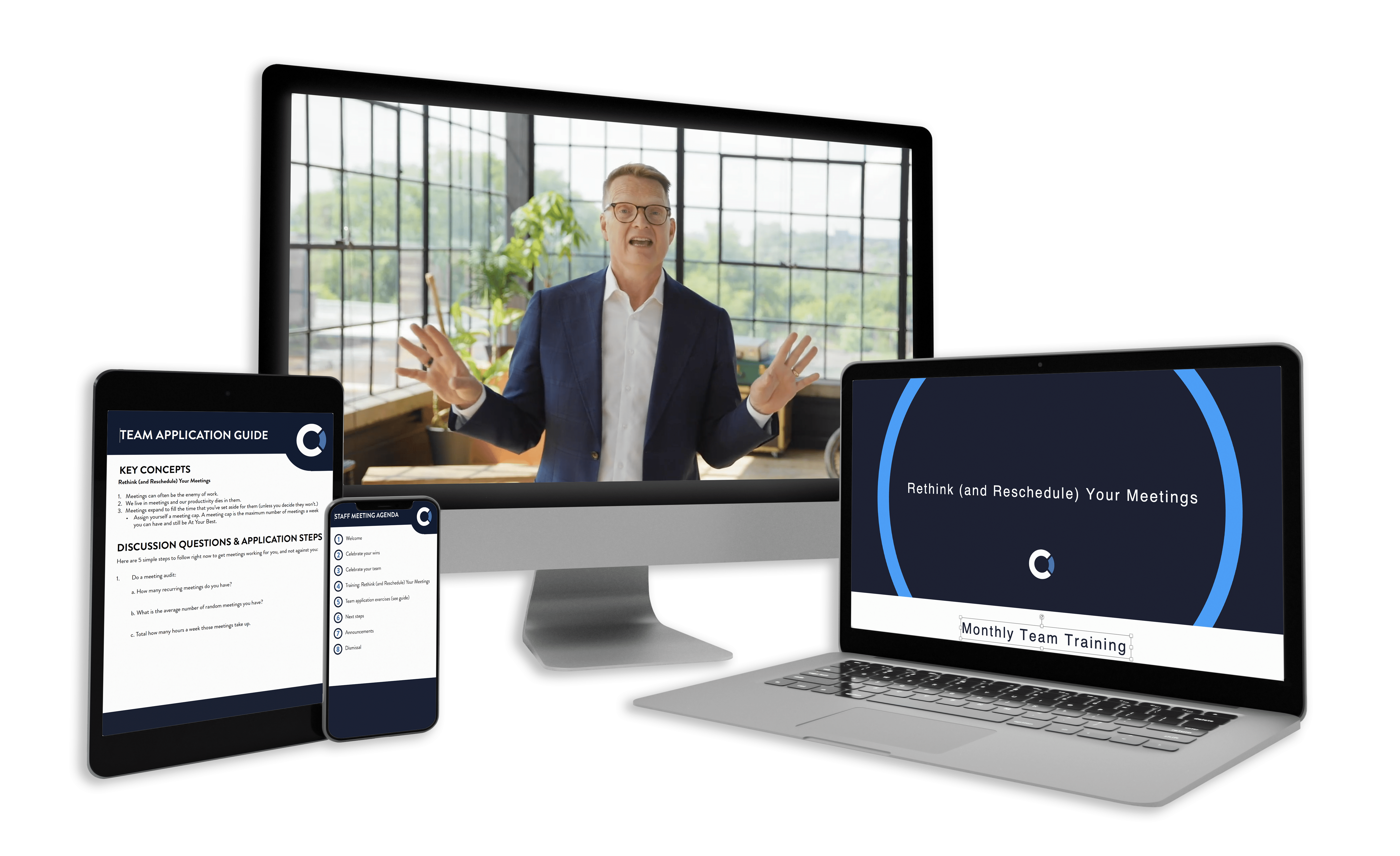
Equip your staff and volunteers to make better decisions with done-for-you leadership development.
Each month, you’ll receive a plug-and-play video training, meeting agenda, and application guide so you can cross staff meeting prep off your to-do list for good.
Building into your leaders and becoming a more effective team has never been easier. Simply set a meeting time, show up, hit play, and you and your team will be miles ahead in no time.


There’s comfort in knowing you can watch (or re-watch) a lesson, use a practical tool or template, send a DM, or simply post a question, and you’ll be moving forward in minutes.
Jasmyn Denton
I learn something new every time I open the app—whether it’s hearing what other leaders are learning and doing, problem-solving with fellow members, or working through the courses, this is a rich, deep well.
The interactions in the comments are always generous, insightful, and not self-inflated. In one of the comment sections, Carey simply said, “There’s so much wisdom in this group. What do people think?” I could have cried for joy.
To have someone point to us and say, “Ask them…” meant more than I can say.
Paul Webster
I’ve created margin in my life and leadership, and I love it. We have a weekly time planned for our family just to be us and play games and have fun together. Having young kids (who are growing up way too fast!), this is my biggest win!
I’ve also reclaimed wasted time at work, where I’m using my green zone to improve my preaching, work on ministry strategy, and create digital content for our church.
Jeremy Cole
There ARE other people out there asking the same questions and going through the same things I am. This makes me feel normal.
What I love the most is the clarity it brings to the complex problems we are all facing as pastors.
And that I don’t have to come up with my own content to invest in my team. I can just use what’s provided here and in the monthly team training content.
Nowhere else do you find such quality content for pastors.
Sarah Starrenburg
I have received so much wisdom, encouragement, and thought-provoking input from an amazing network of people I otherwise would never have met. The Academy is truly a gift.
Dave Allman
Our church has grown spiritually, numerically, and financially. We identified that we were understaffed, and our payroll was far below the standard budget.
Since joining, our church attendance has nearly doubled in size; we hired two more full-time and one more part-time staff. We have raised over two million dollars and will be debt-free on our property at the end of this year.
The feeling of being overwhelmed is lifting from my shoulders as we have expanded our team.
Brody Tubaugh
I took the course on generosity inside the Art of Leadership Academy, and we actually have a plan now. I’m so excited.
I’ve never been excited about money [at church], and now there’s light at the end of the tunnel instead of just barely scraping by.
Josiah Petermann
This has been a breath of fresh air. I was overworked and overwhelmed, and our staff was stuck maintaining the mission hung on the wall.
Since joining and using the programs, we’ve heard so many encouraging insights that have helped us move our mission forward and invite people to join us.
Chris Hallbach
After working through the Art of Preaching, I was compelled to preach noteless for the first time ever, and it went incredibly well. My bottom line was clear and thoughtful.
I even had multiple people come up to tell me how engaging and dynamic my message was. I can’t wait to keep getting better.
Mike Willis
I am absolutely thrilled and overflowing with gratitude for this incredible community that has been an invaluable guide in equipping me to lead my church through a replant!
The unwavering support and expert advice have been a game-changer for me as a pastor.
I’m confidently charting a course toward a bright and successful future for my church!
You may be asking yourself, “What’s this community like? Am I going to fit in?”
Churches of all sizes (church plants right to 5,000+ in attendance) and denominations come together in our life-giving community, which means you’ll find a group of leaders who truly understand what you’re leading through.
Plus, our values help us understand how we interact with each other and keep the community free of the trolls and self-promoters you find everywhere else online.
Don’t let the same old…
Strategies Coaching Groups Methods
Networks Mentors
… get you the same old results.
In the Art of Leadership Academy, you’ll get the answers to grow your church and your leadership — confidently, clearly, and with a group of leaders supporting you along the way. Choose how you’d like to join below.
Annual Plan – Save $187
$497 / year
Engage a Private Online Community of Church Leaders
Unlimited Access to All Courses and Resources
Live Coaching Calls
Monthly Training for Staff and Volunteers
Onboarding Call Invested in Your Success
30-Day Money Back Guarantee
Monthly Plan
$57 / month
Engage a Private Online Community of Church Leaders
Unlimited Access to All Courses and Resources
Live Coaching Calls
Monthly Training for Staff and Volunteers
Onboarding Call Invested in Your Success